Towards a General-Purpose Video Model for Primate Behavior in the Wild
Felix B. Mueller,Jan F. Meier,Timo Lueddecke,Richard Vogg,Roger L. Freixanet,Valentin Hassler,Tiffany Bosshard,Elif Karakoc,William J. O'Hearn,Sofia M. Pereira,Sandro Sehner,Kaja Wierucka,Judith Burkart,Claudia Fichtel,Julia Fischer,Alexander Gail,Catherine Hobaiter,Julia Ostner,Liran Samuni,Oliver Schülke,Neda Shahidi,Erin G. Wessling,Alexander S. Ecker
Call for Data Contributions: We want to turn this project into a broad data collection and curation effort to give computer vision researchers easy access to large-scale high-quality diverse primate videos. The goal is to make it easier to develop methods that work across varying settings and species. If you have primates videos to contribute (observational or part of experiments, no labels or curation needed, can be from test runs or failed experiments), please email felix.mueller@cs.uni-goettingen.de to become part of the effort!
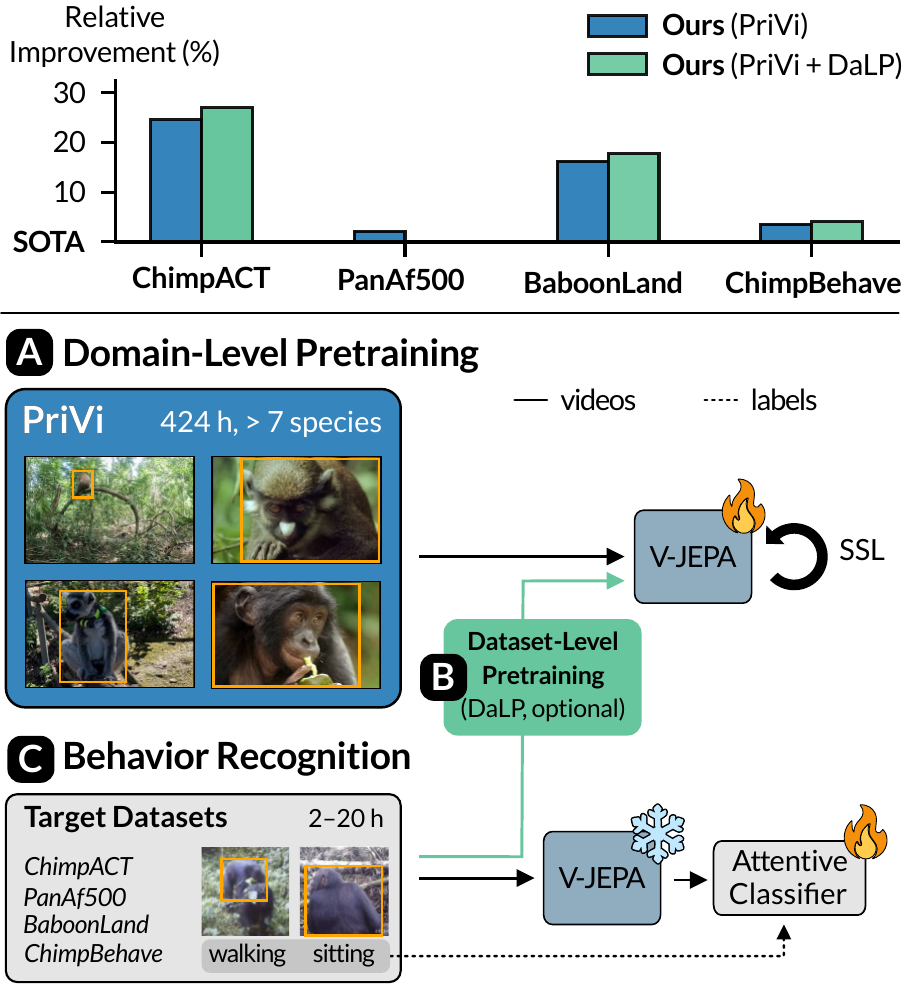
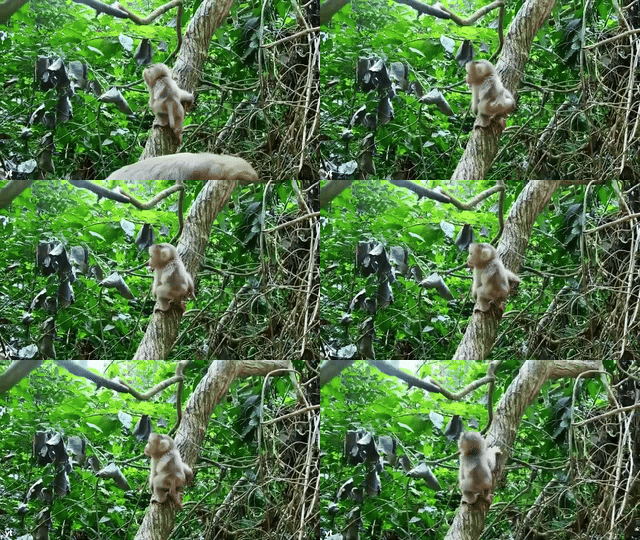
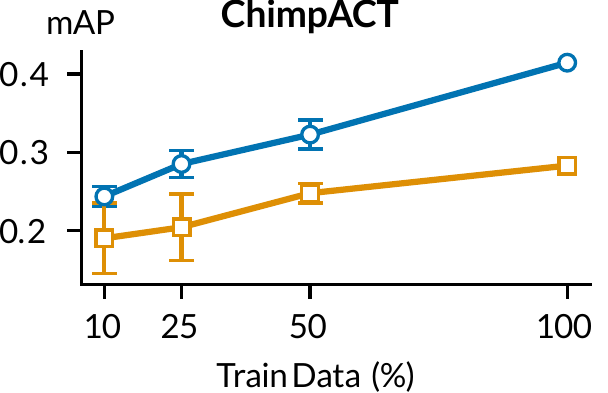
Pretraining on PriVi improves state-of-the-art across four primate behavior benchmarks. Frozen evaluation of a V-JEPA model pretrained on PriVi consistently outperforms prior work, including fully finetuned baselines. Additionally pretraining on the target datasets improves performance further.
Abstract
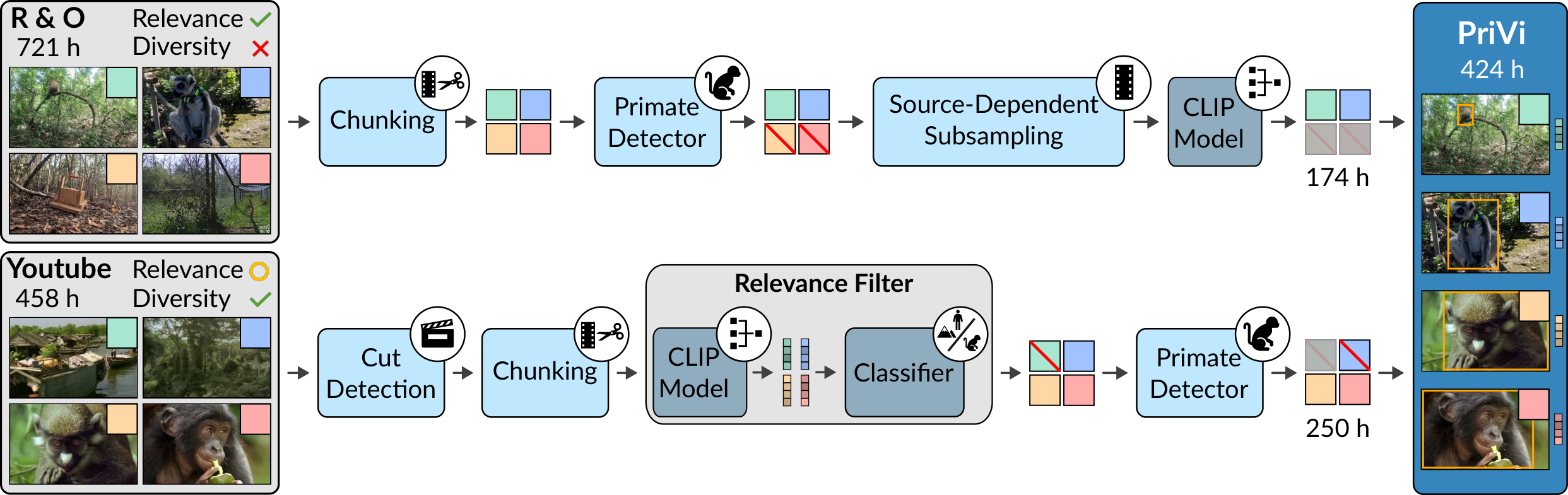
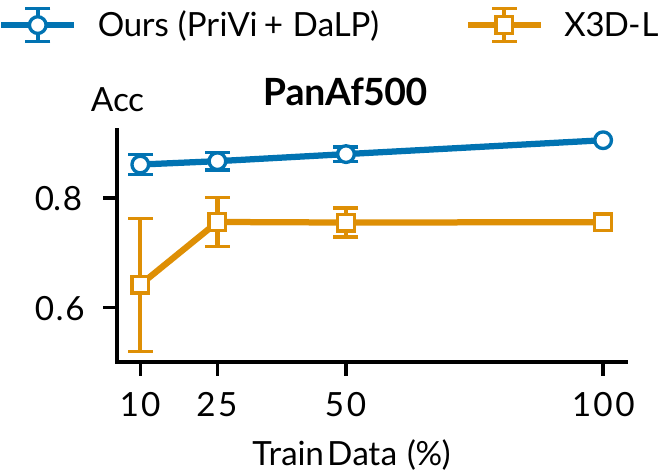
Non-human primates are our closest living relatives, and analyzing their behavior is central to research in cognition, evolution, and conservation. Computer vision could greatly aid this research, but existing methods often rely on human-centric pretrained models and focus on single datasets, which limits generalization. We address this limitation by shifting from a model-centric to a data-centric approach and introduce PriVi, a large-scale primate-centric video pretraining dataset. PriVi contains 424 hours of curated video, combining 174 hours from behavioral research across 11 settings with 250 hours of diverse web-sourced footage, assembled through a scalable data curation pipeline. We continue pretraining V-JEPA, a large-scale video model, on PriVi to learn primate-specific representations and evaluate it using a lightweight frozen classifier. Across four benchmark datasets — ChimpACT, PanAf500, BaboonLand, and ChimpBehave — our approach consistently outperforms prior work, including fully finetuned baselines, and scales favorably with fewer labels. These results demonstrate for the first time that domain-level pretraining, where pretraining is conducted on similar data but not the target dataset itself, works for video models. Our primate-centric pretraining substantially improves data efficiency and generalization, making it a promising approach for low-label applications.
Dataset Samples
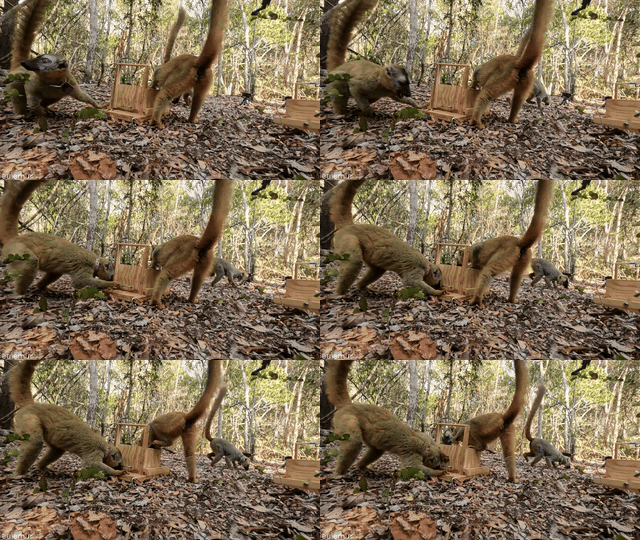
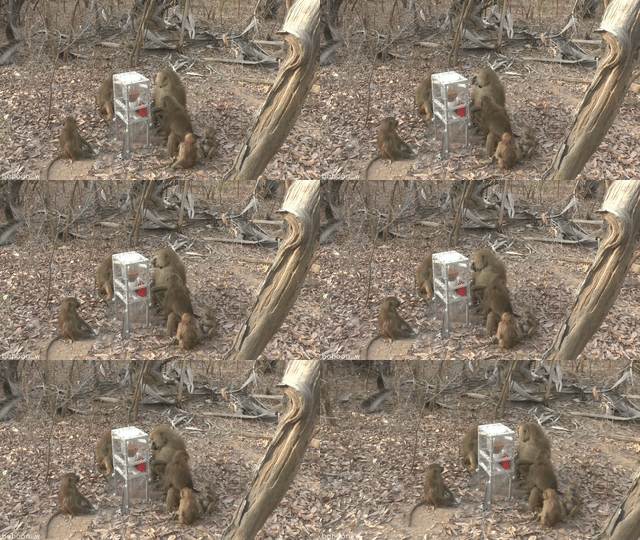
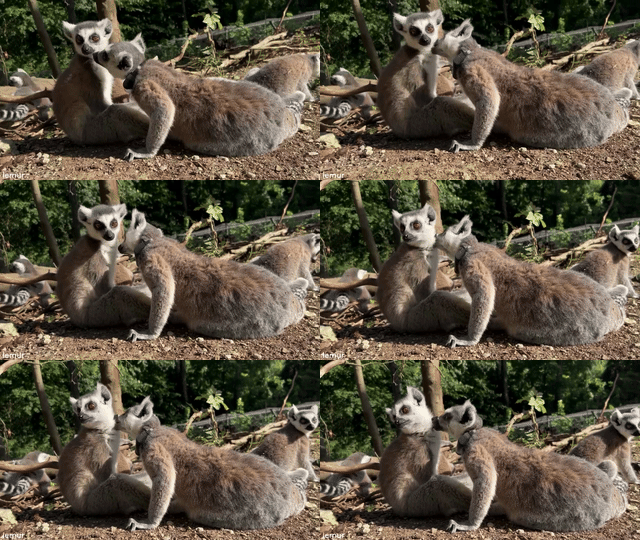
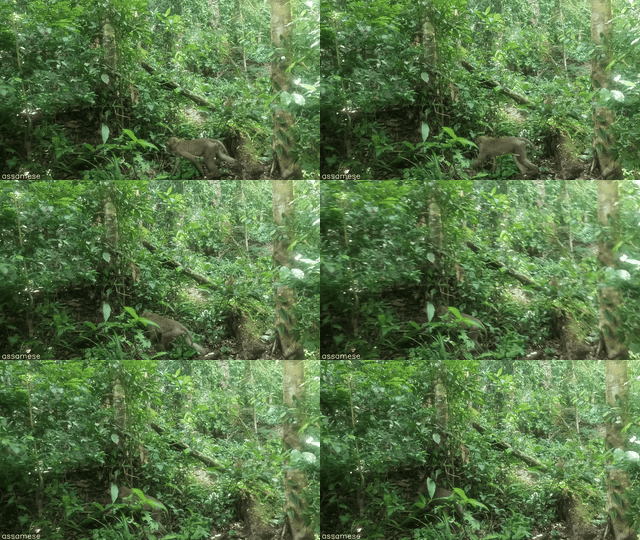
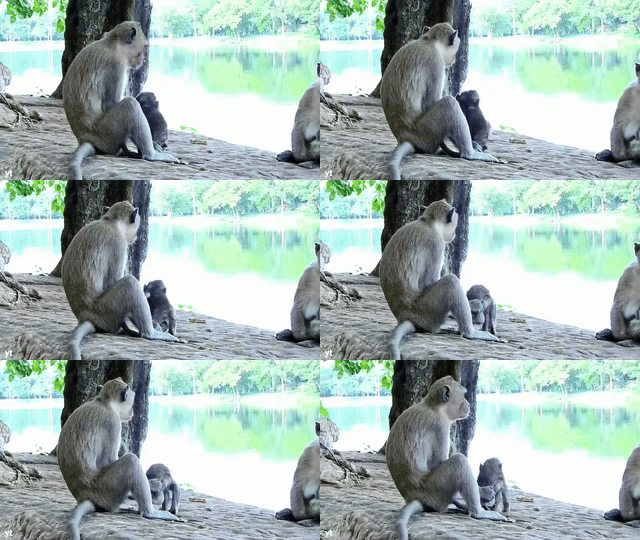
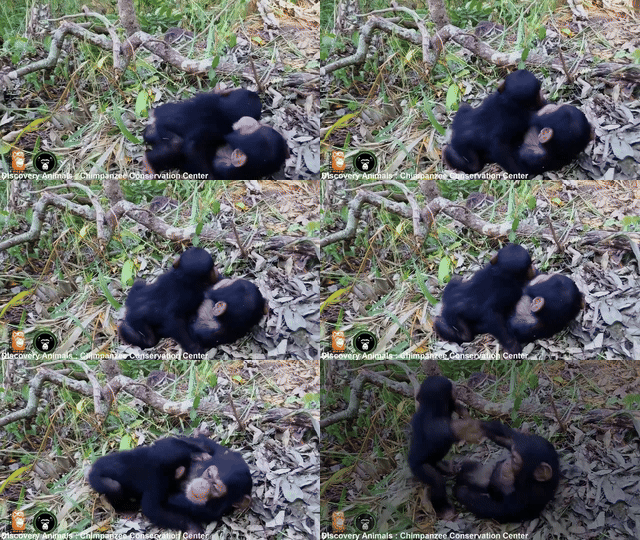
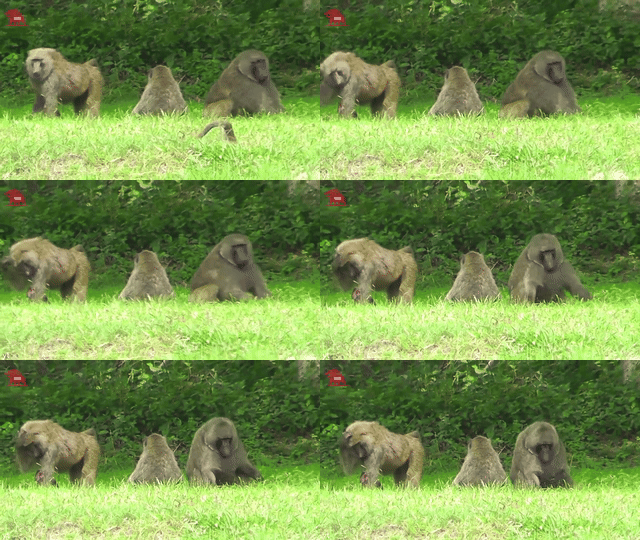
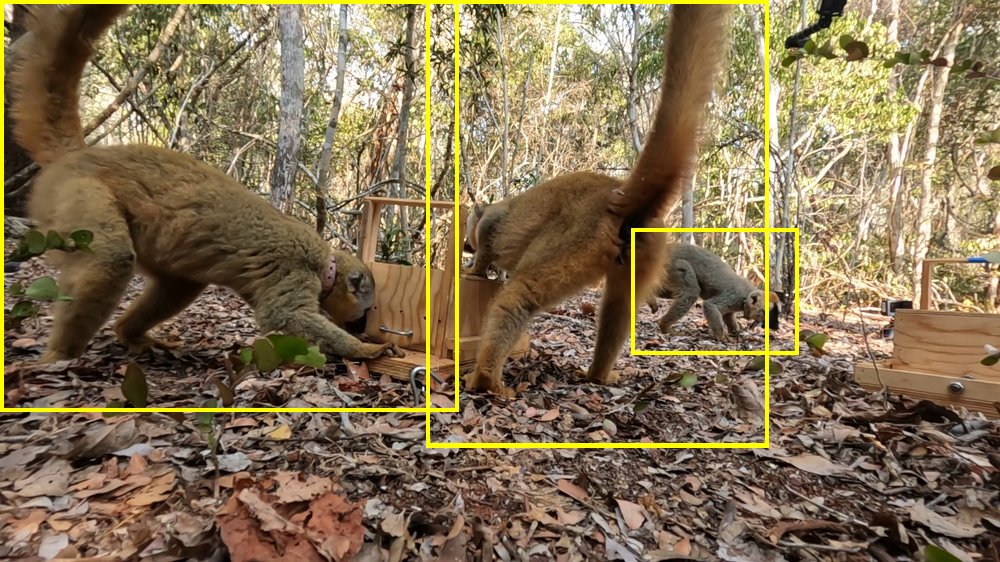
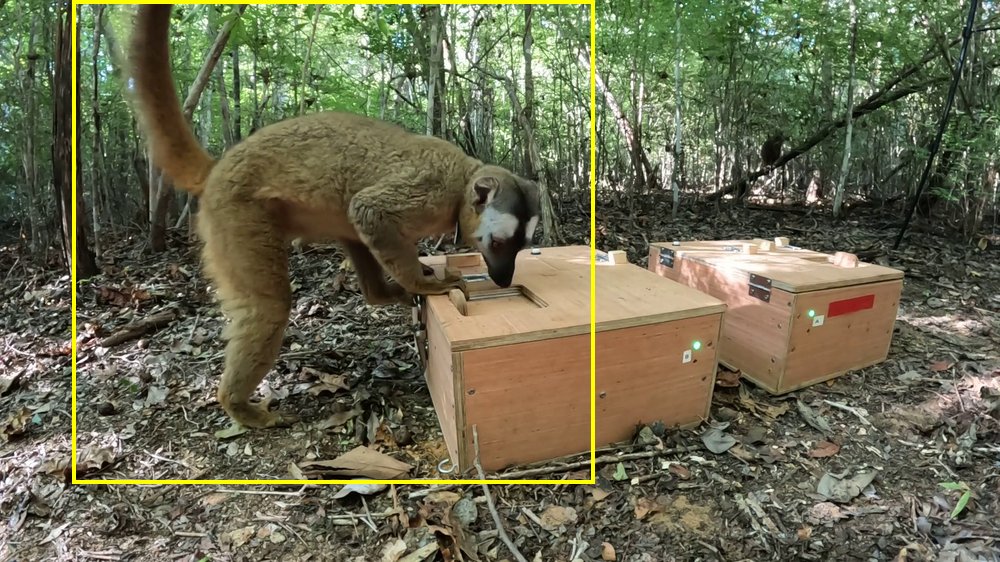
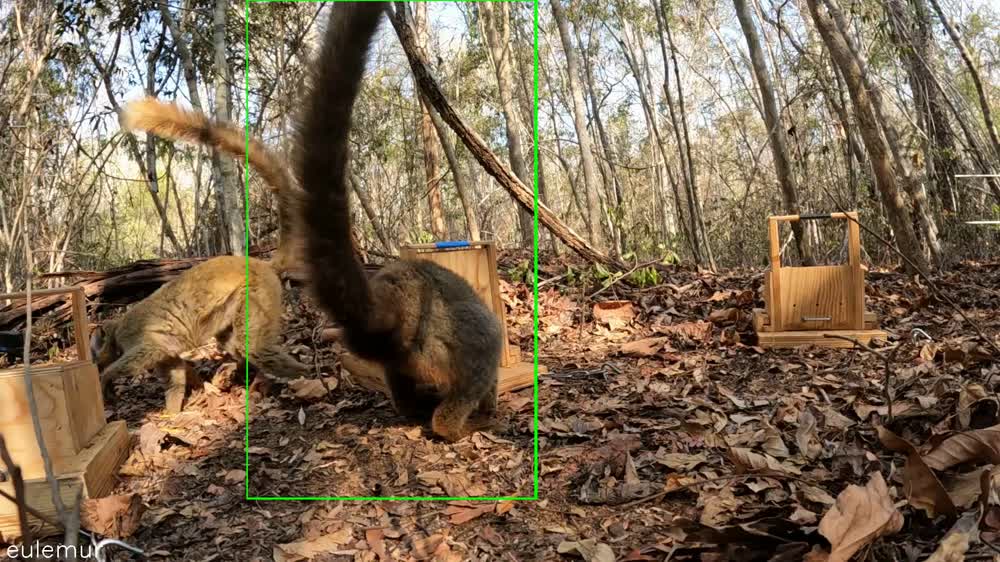
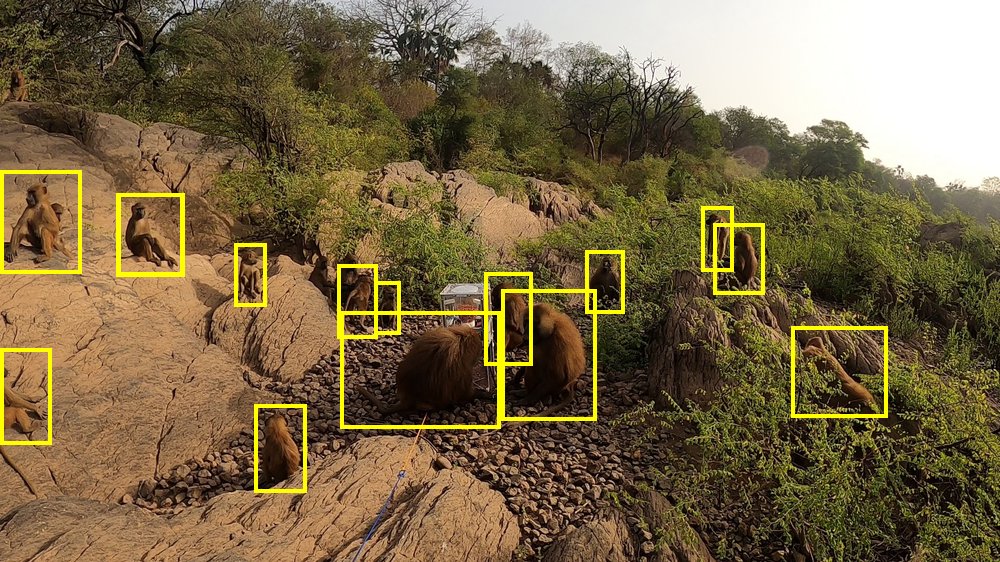
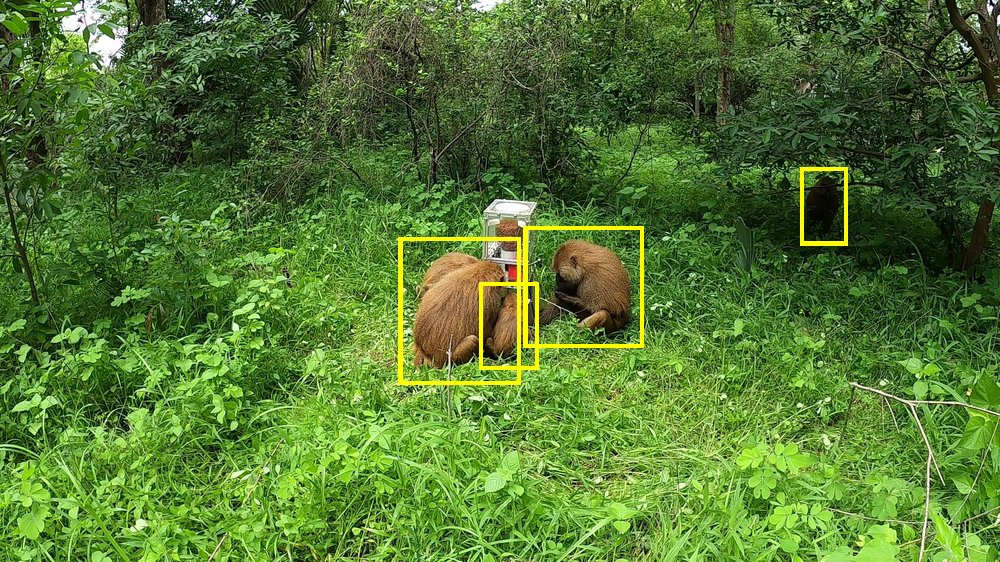
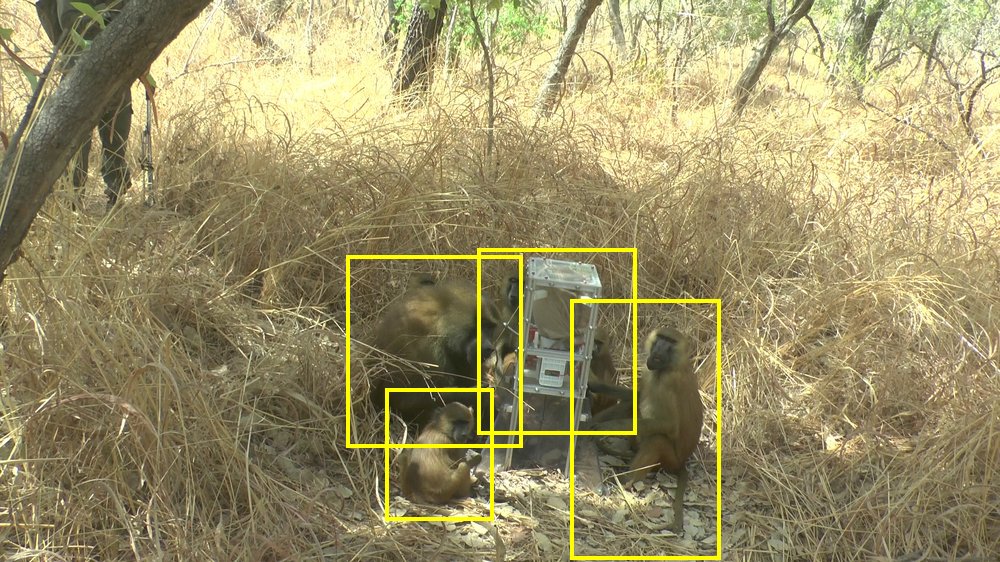
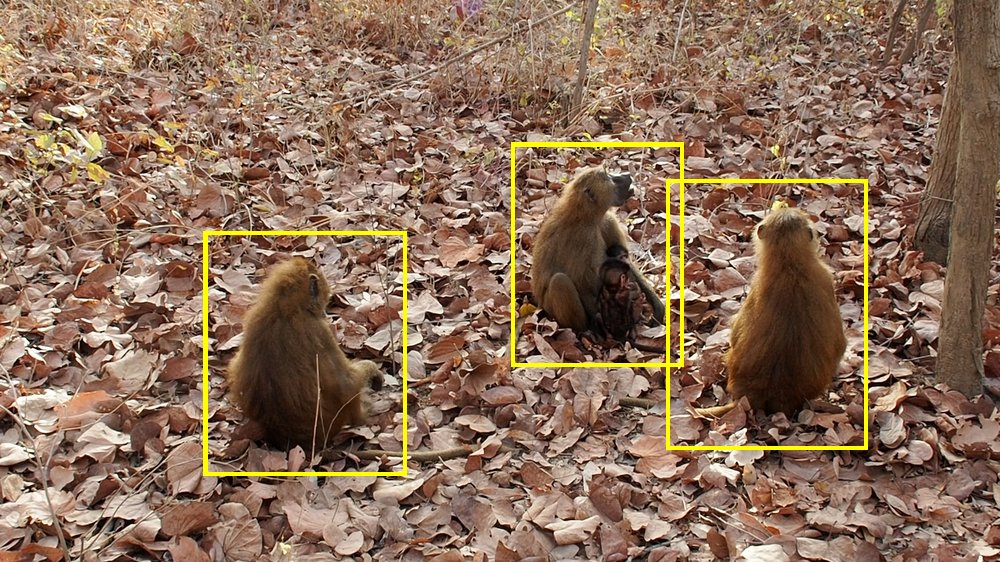
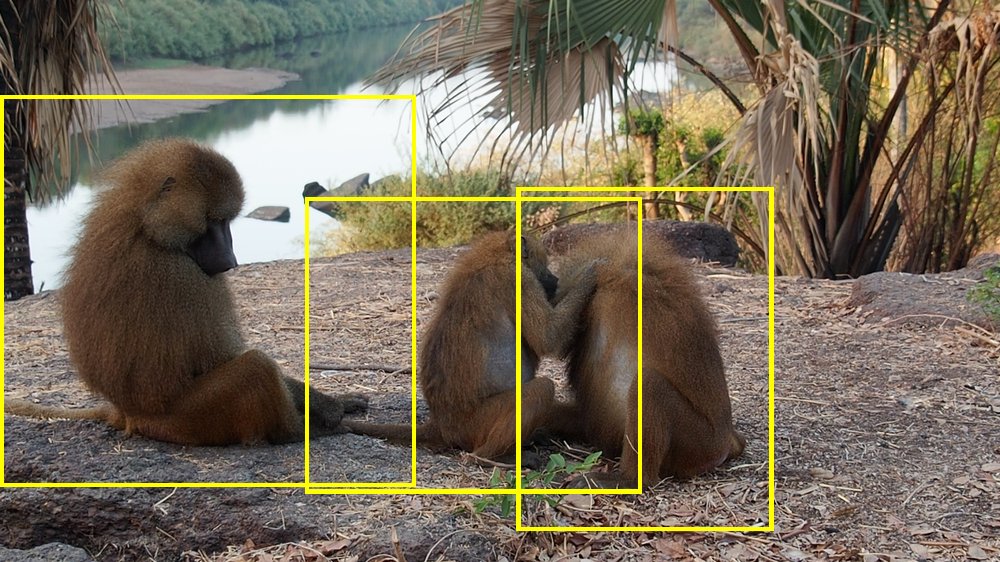
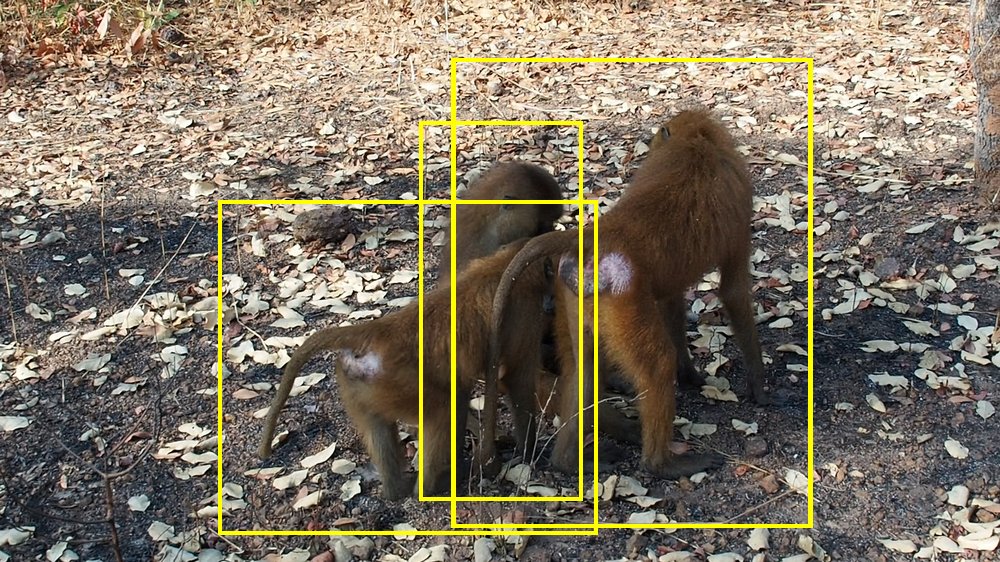
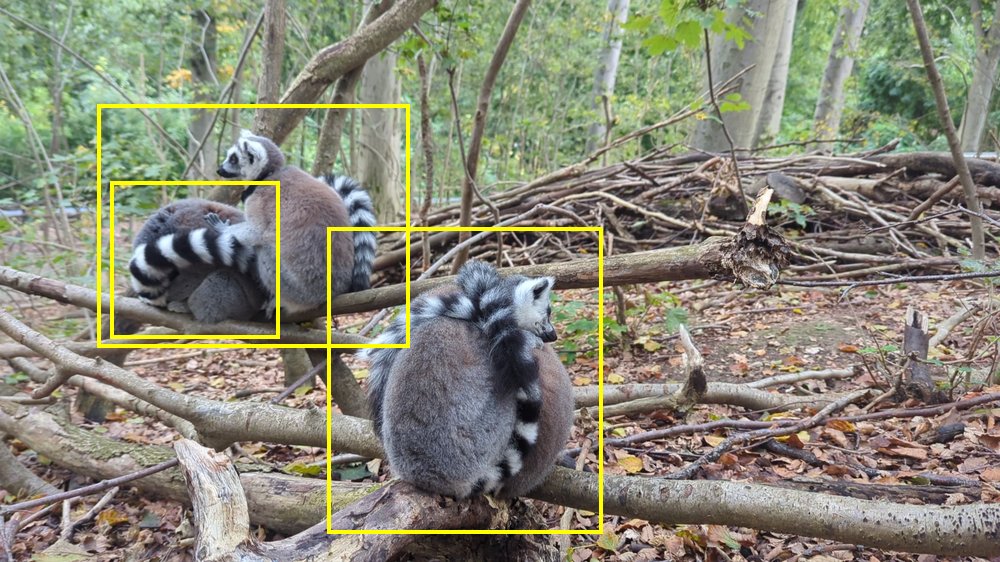
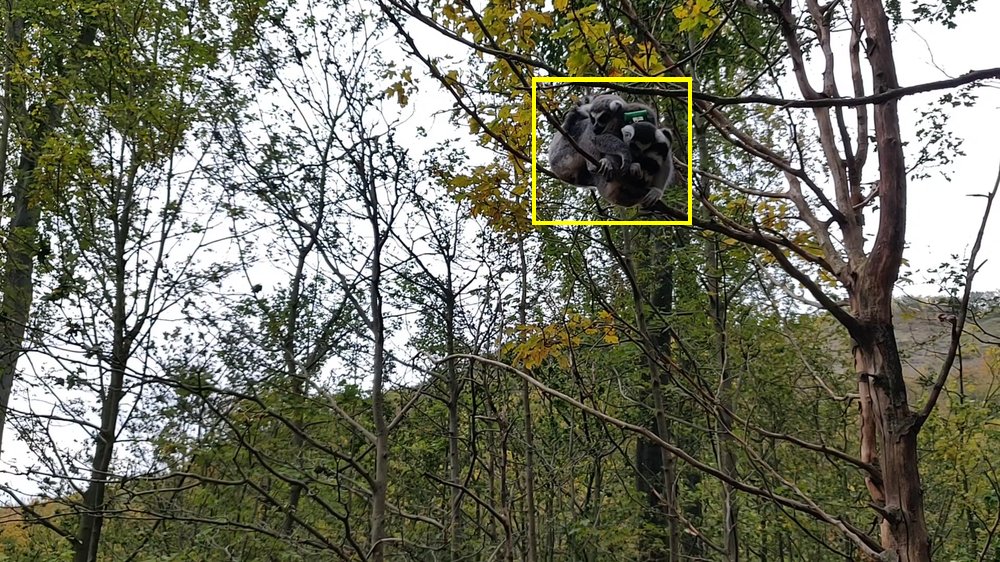
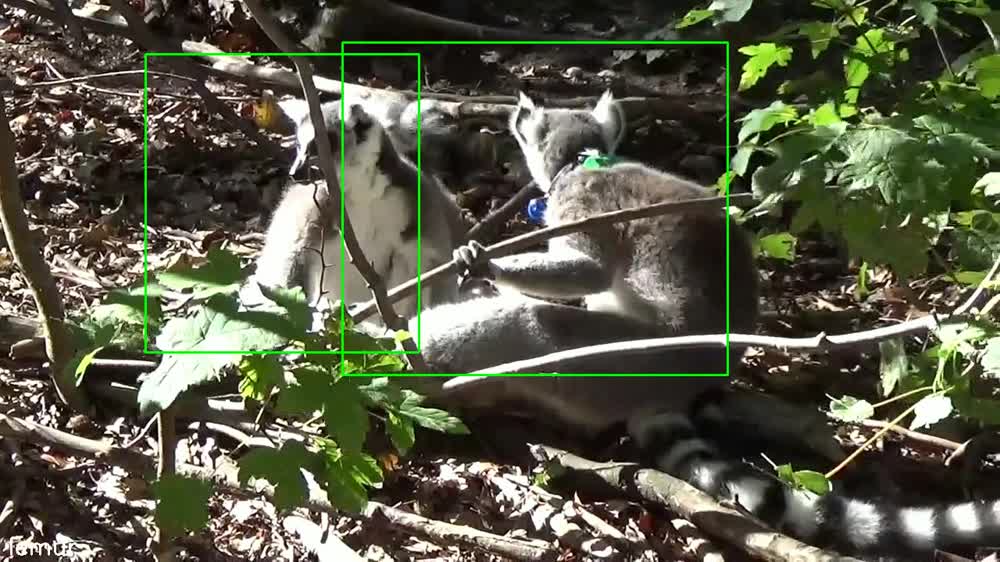
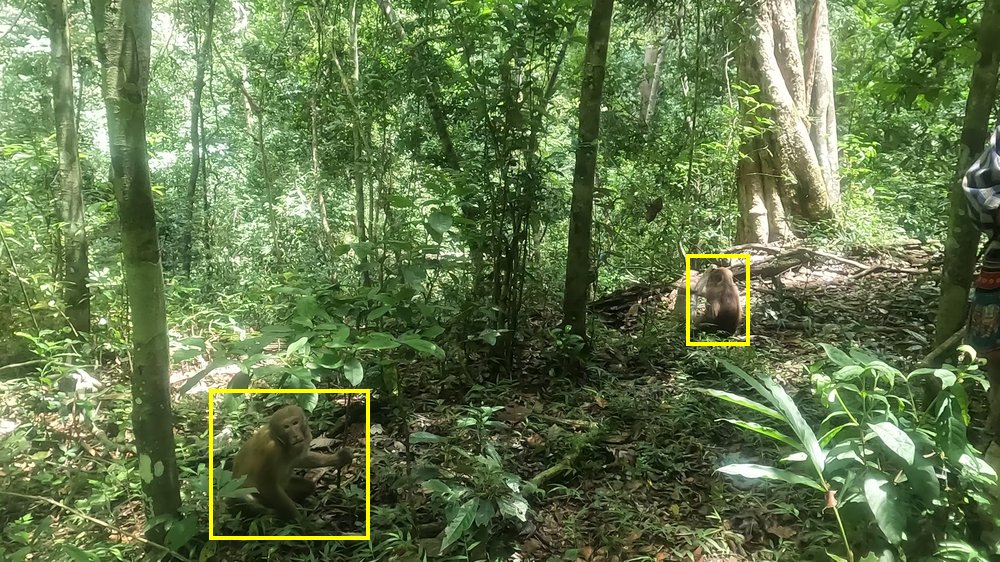
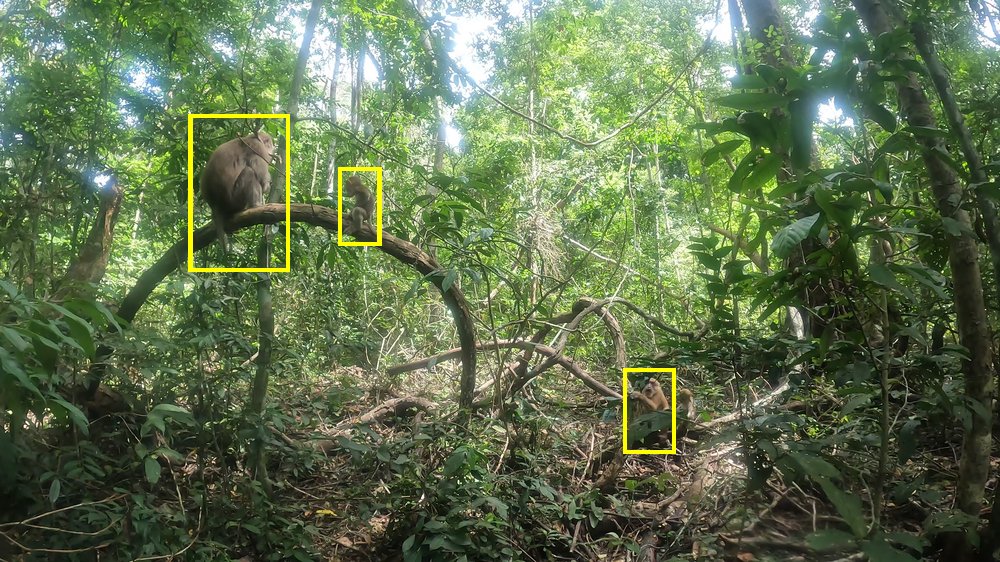
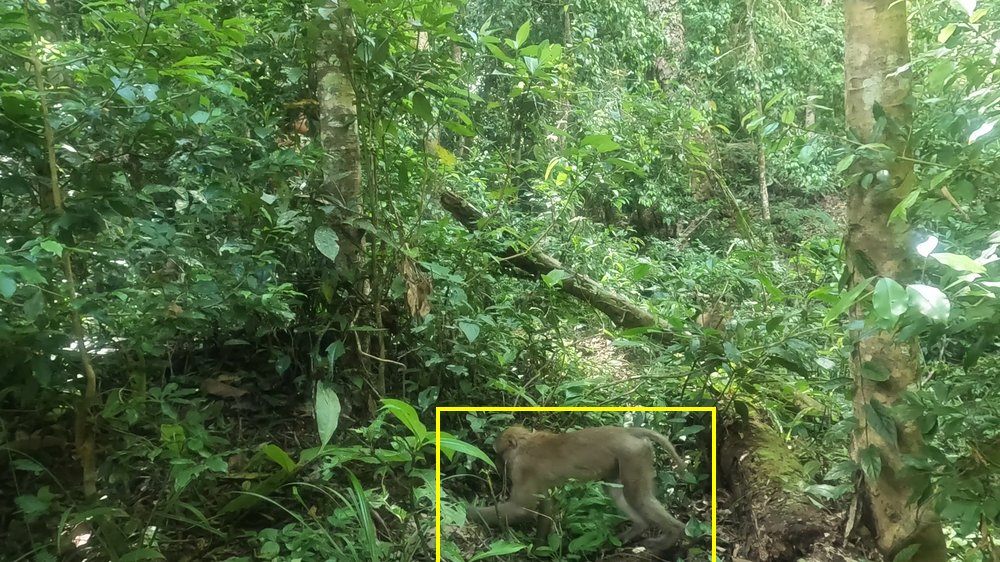
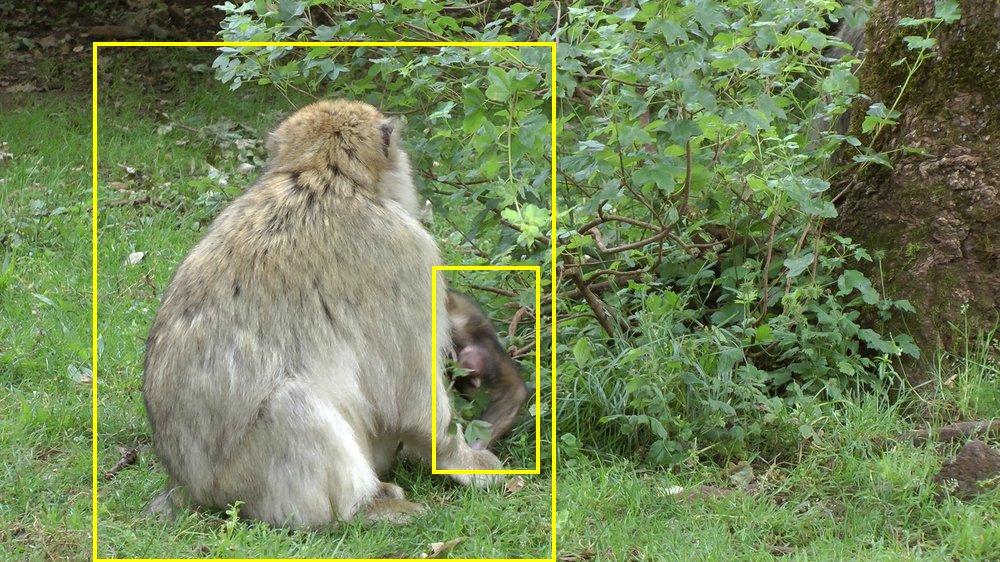
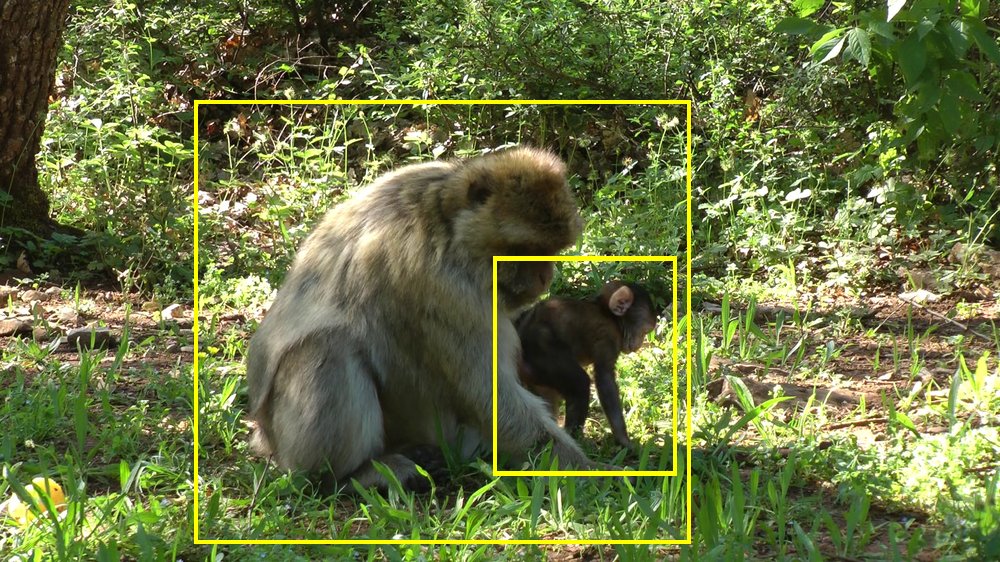
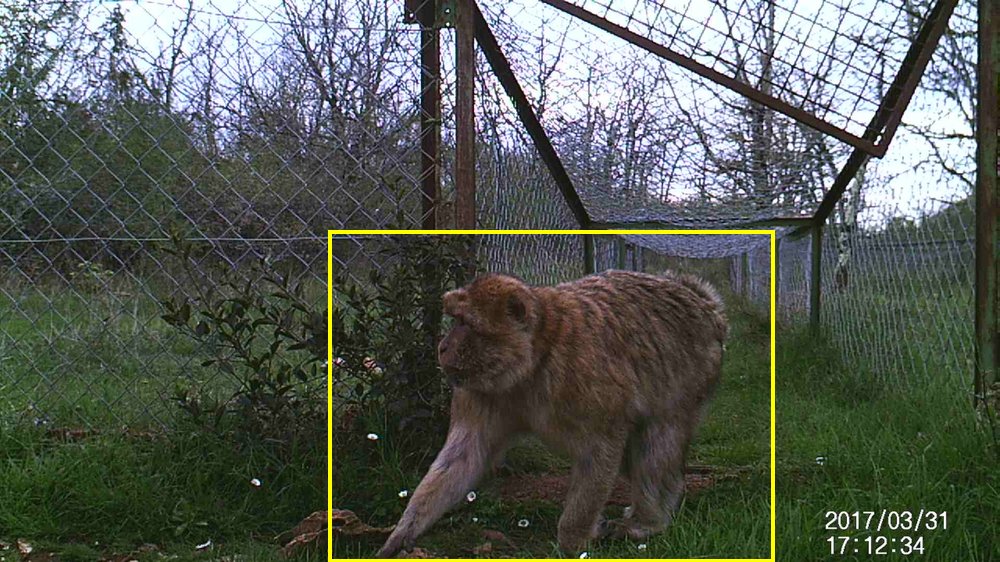
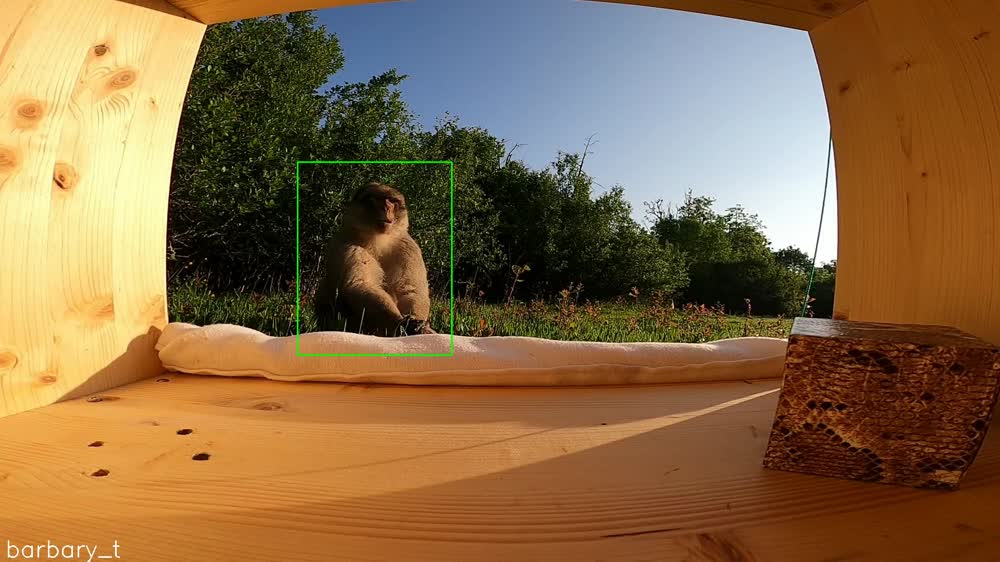
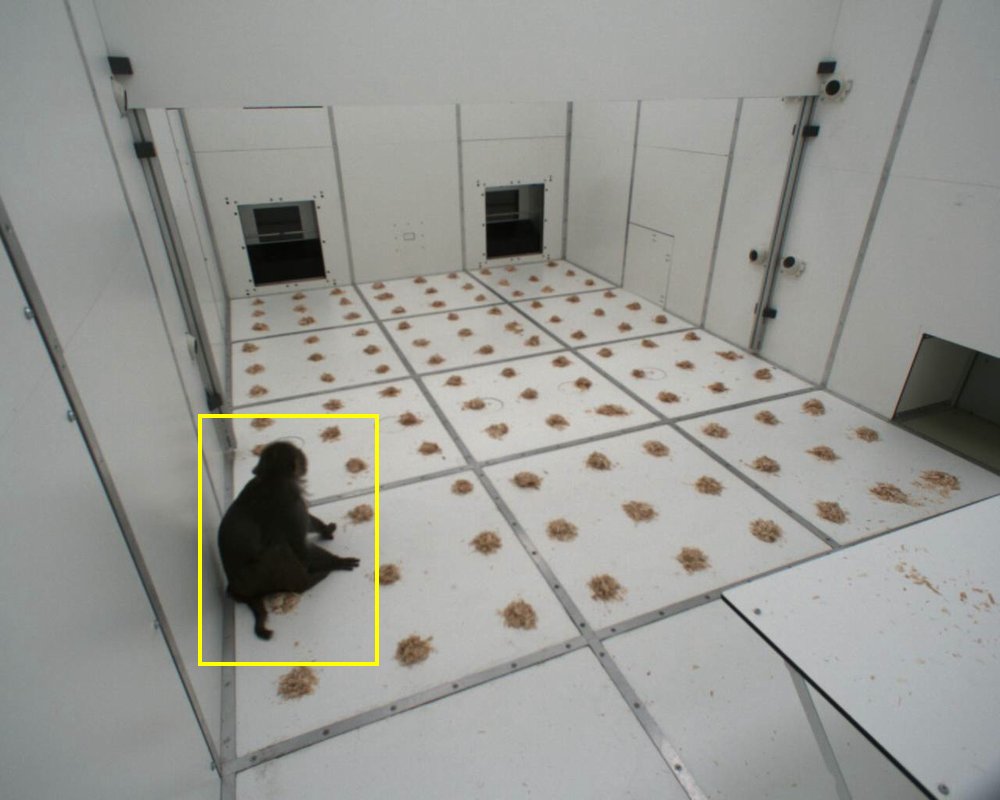
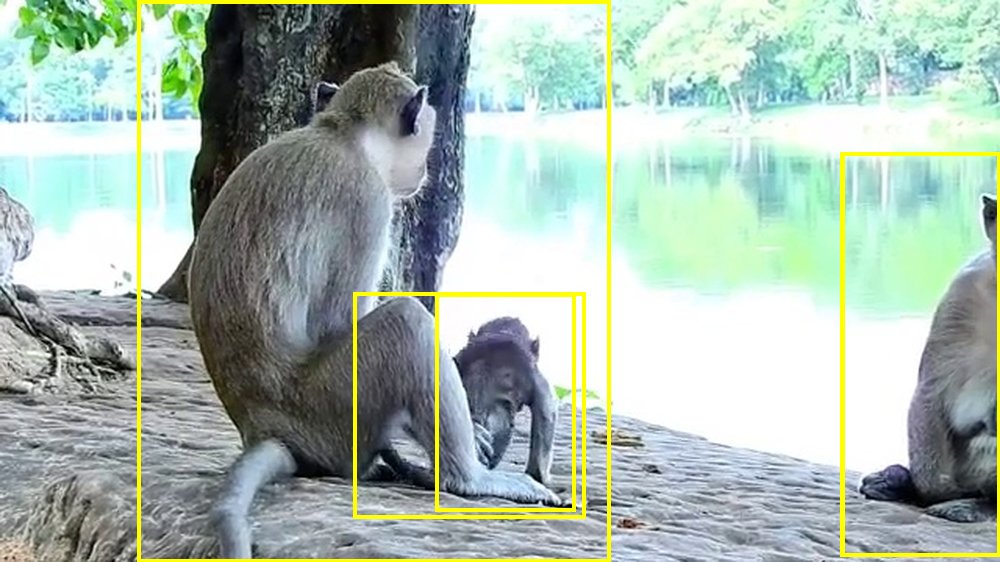
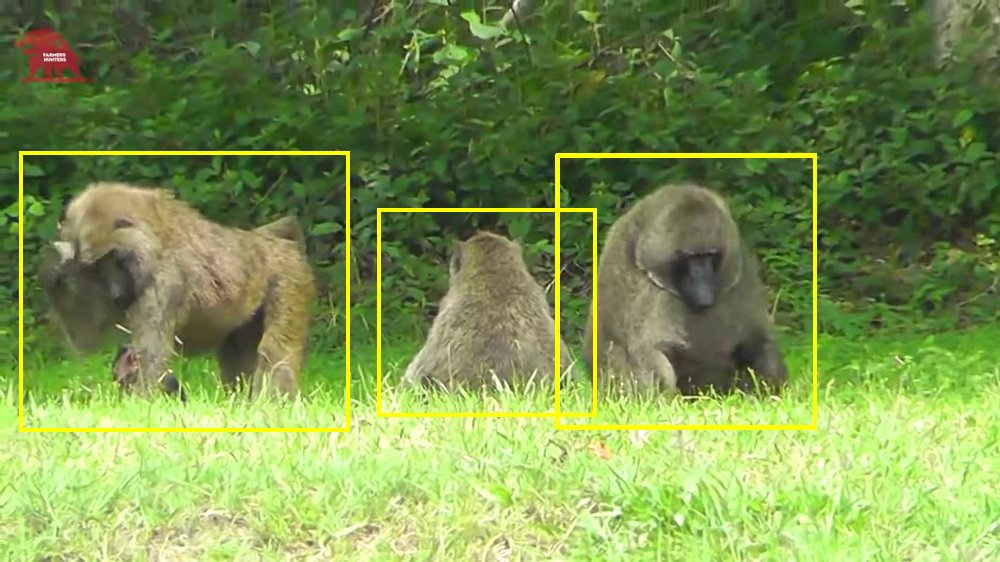
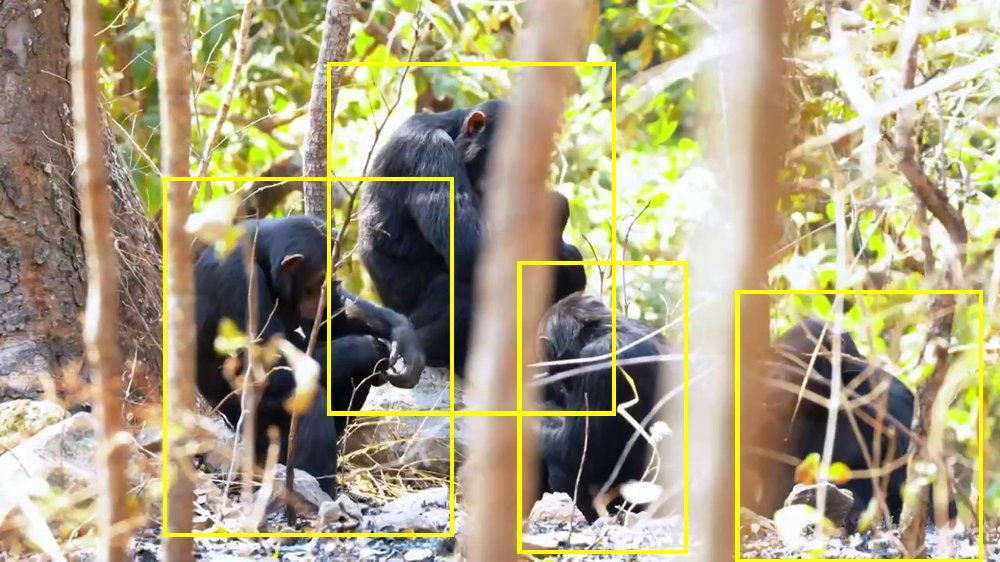
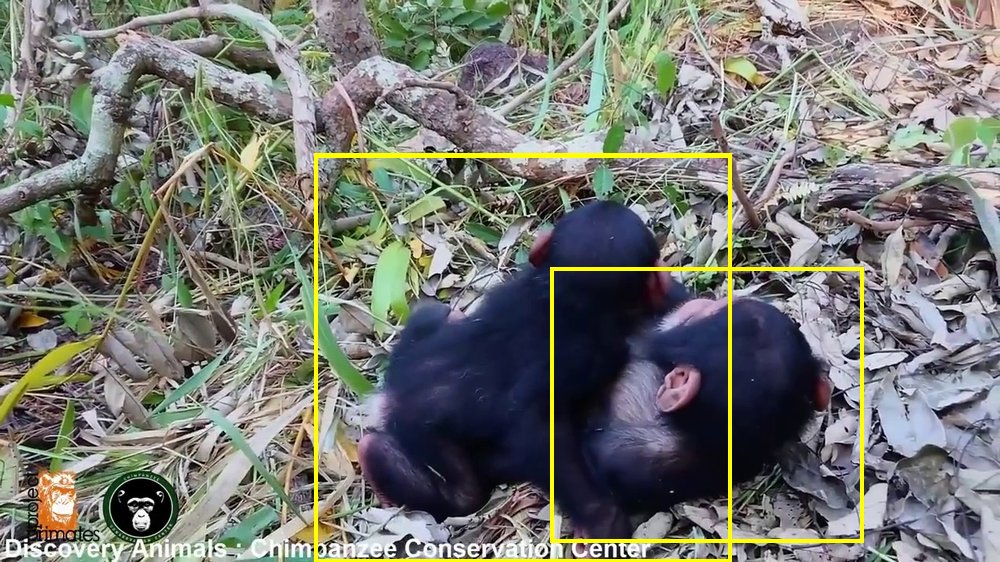
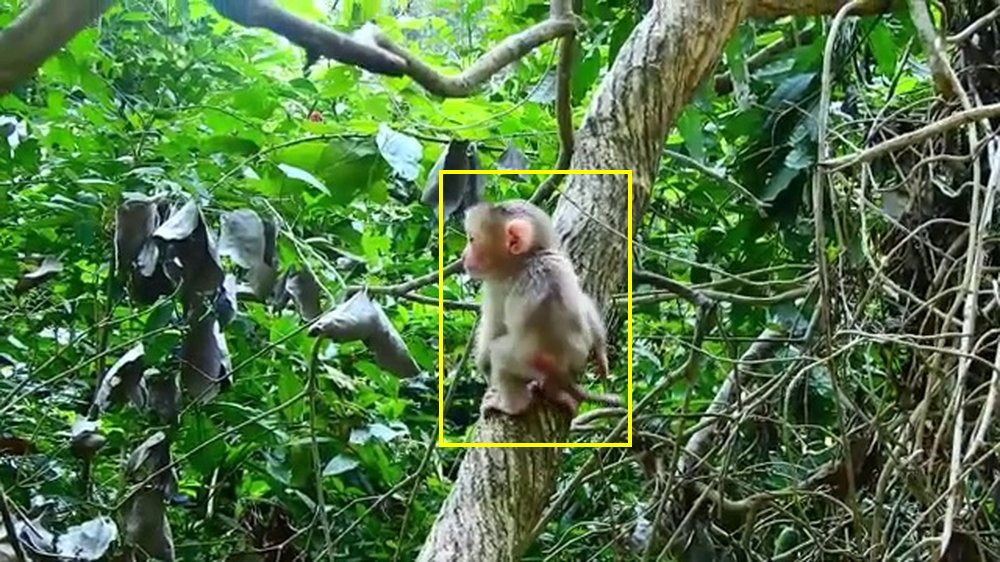
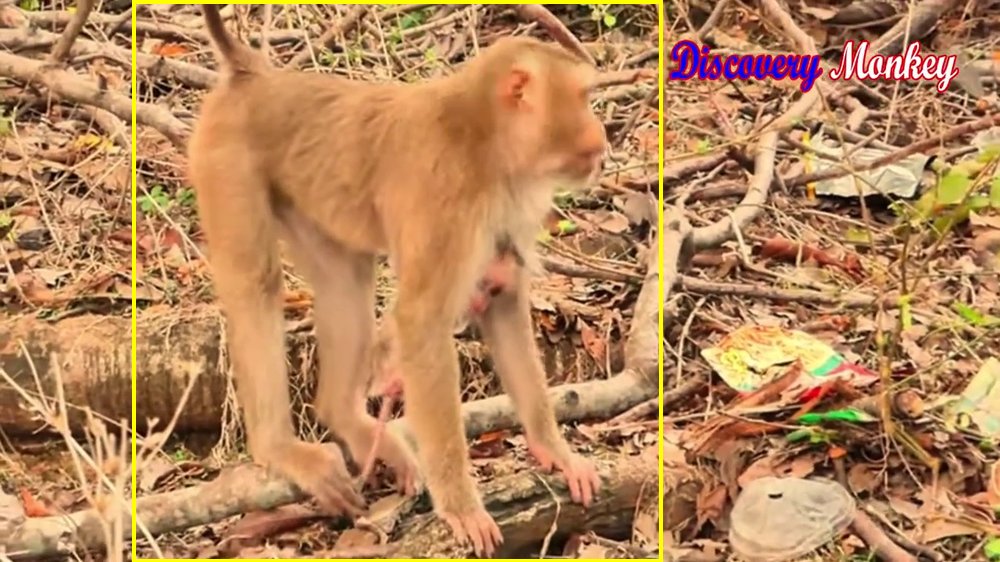
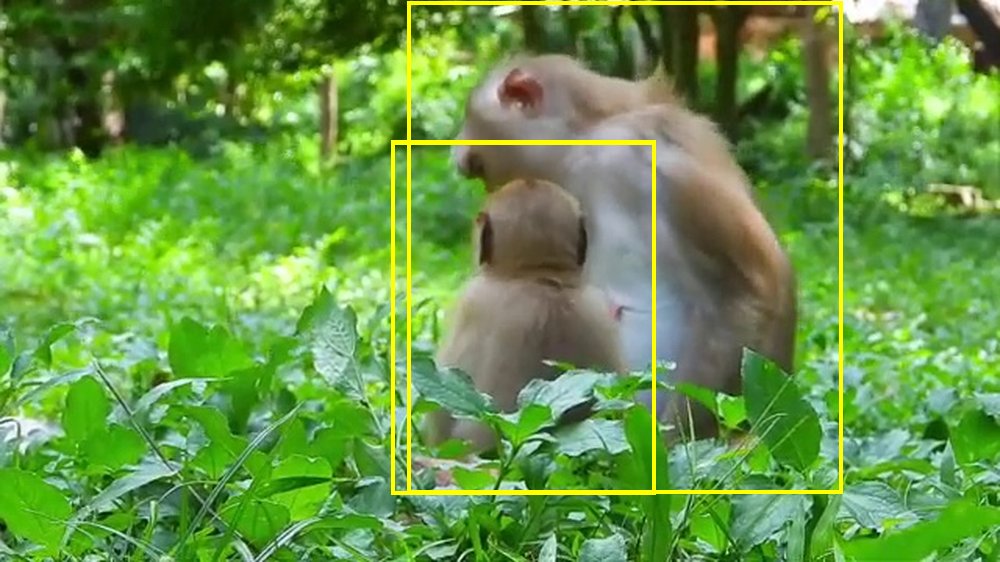
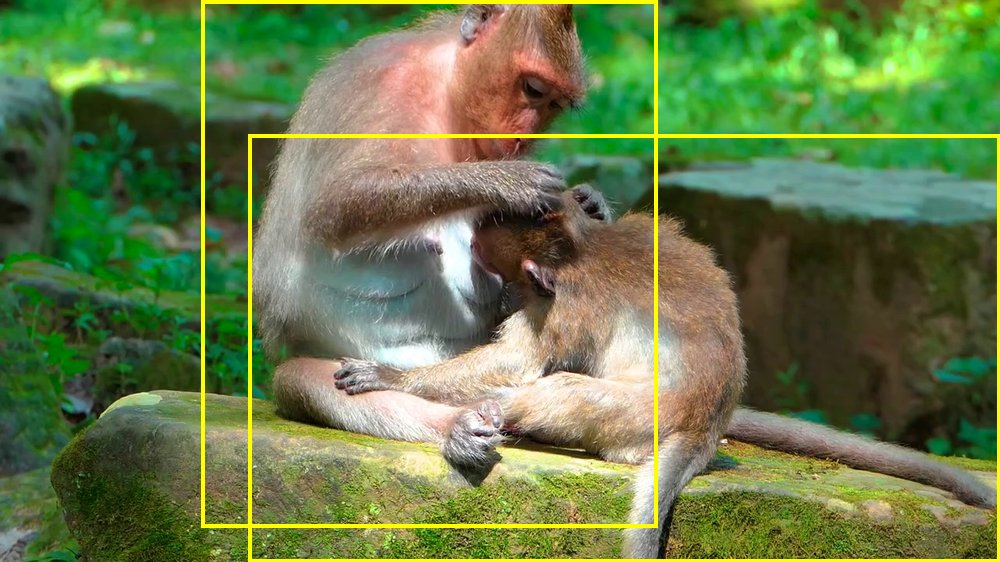
PriVi spans a wide range of primate species, environments, and recording conditions — from camera traps in the wild to controlled lab settings.
Eulemur · Wild
Baboon · Wild
Ring-tailed Lemur · Wild-like
Assamese Macaque · Wild
Primate · YouTube
Primate · YouTube
Primate · YouTube
Primate · YouTube
Dataset Overview
424 h
Total Video
7+
Primate Species
11
Research Settings
720K
Video Clips
PriVi combines two complementary subsets: R&O (174h) consists of research video from 11 behavioral studies spanning lemurs, baboons, chimpanzees, macaques, marmosets, and more. YT-Filtered (250h) adds diverse web-sourced footage curated through our automated pipeline to maximize coverage of species and settings.
Species Distribution
Genus / Family
YT-Filt.
R&O
PriVi
Macaques
63.1%
14.1%
43.0%
Chimpanzees
7.8%
35.7%
19.3%
Baboons
1.3%
16.2%
7.4%
True Lemurs
<1%
22.7%
9.8%
Marmosets
<1%
5.7%
2.1%
Squirrel monkeys
<1%
5.4%
2.0%
Orangutans
4.1%
0%
2.4%
Others
8.1%
0%
4.8%
Setting Distribution
Setting
YT-Filt.
R&O
PriVi
In the wild
59.6%
62.7%
60.9%
Wild-like
27.8%
22.4%
25.6%
Indoors
4.1%
14.6%
8.4%
Not identifiable
8.6%
0%
5.1%
Data curation pipeline. Our automated pipeline filters, deduplicates, and curates web-sourced primate videos at scale.
Method
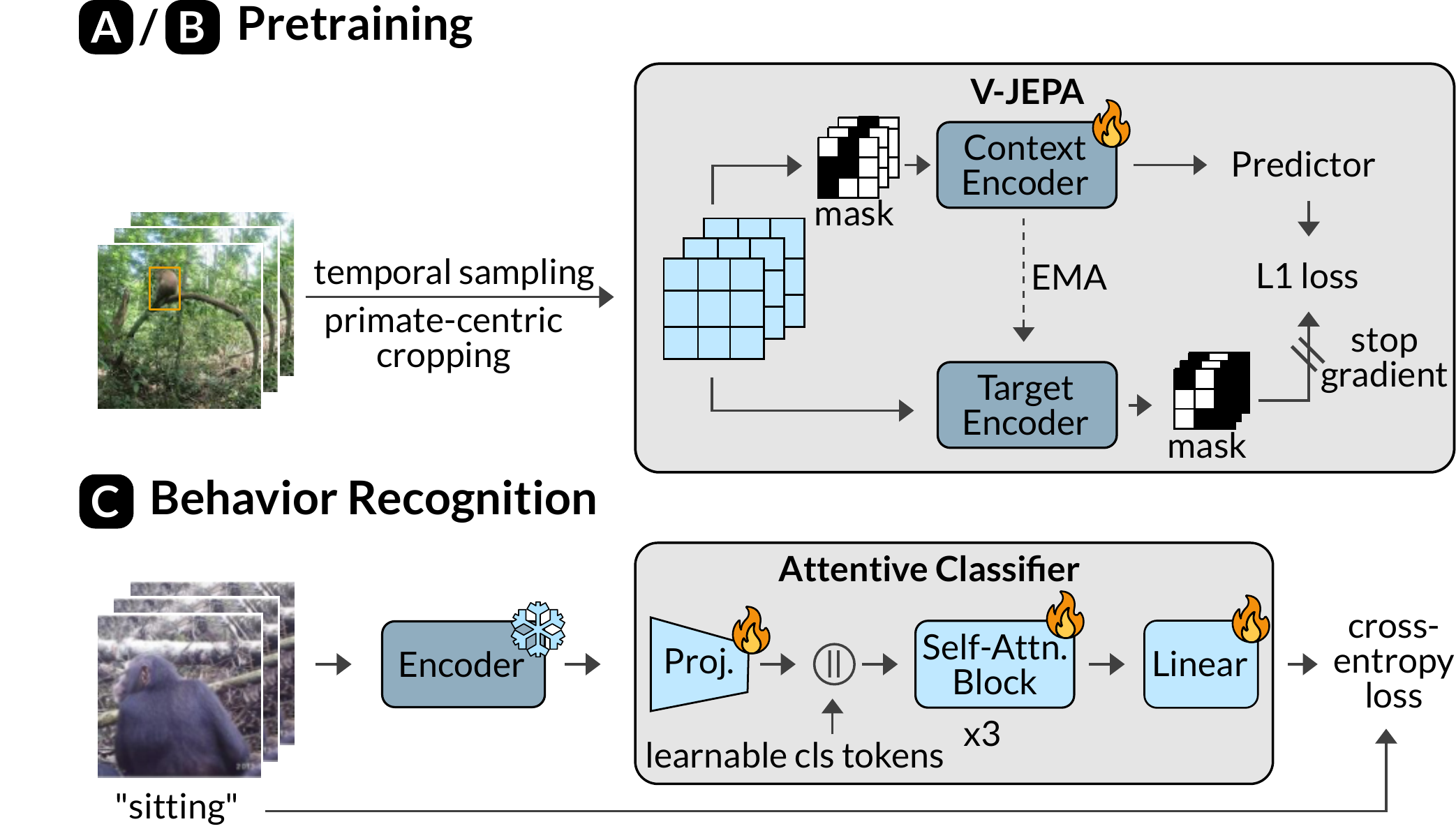
We continue pretraining V-JEPA (ViT-L) on PriVi to learn primate-specific video representations. For evaluation, we develop a lightweight attentive classifier with only 220K trainable parameters on top of the frozen encoder. This enables efficient training for diverse primate behavior benchmarks without finetuning the backbone.
Model overview. We continue pretraining V-JEPA on PriVi and optionally the target dataset, then evaluated with a frozen backbone and lightweight attentive classifier.
Benchmark Results
PriVi consistently outperforms prior methods across four primate behavior benchmarks, including fully finetuned baselines with orders of magnitude more trainable parameters.
Method
ChimpACT
PanAf500
BaboonLand
ChimpBehave
mAP
mAPw
Acc
B-Acc
Acc
B-Acc
Acc
B-Acc
X3D
27.05
51.60
80.00
50.35
64.89
31.41
89.3
62.8
VideoMAEv2
—
—
—
—
—
—
92.3
74.8
UniformerV2-B
—
—
—
—
63.45
28.67
—
—
InternVideo-L
25.7
—
78.57
54.01
—
—
—
—
ChimpVLM
—
—
84.91
61.94
—
—
—
—
VideoPrism-g
31.5
—
—
—
—
—
—
—
Our Classifier
V-JEPA
36.33
55.50
82.96
56.69
74.91
26.99
94.99
68.41
PriVi
39.25
58.16
86.74
62.75
75.43
33.99
95.58
71.30
PriVi + DaLP
40.00
59.29
85.01
62.96
76.42
38.57
96.02
75.14
Bold = best, underline = second best. Results on test sets.
PriVi scales favorably with fewer labeled data. Error bars are 95% confidence intervals estimated over three different subsets. Results on validation sets.
Dataset Examples Gallery
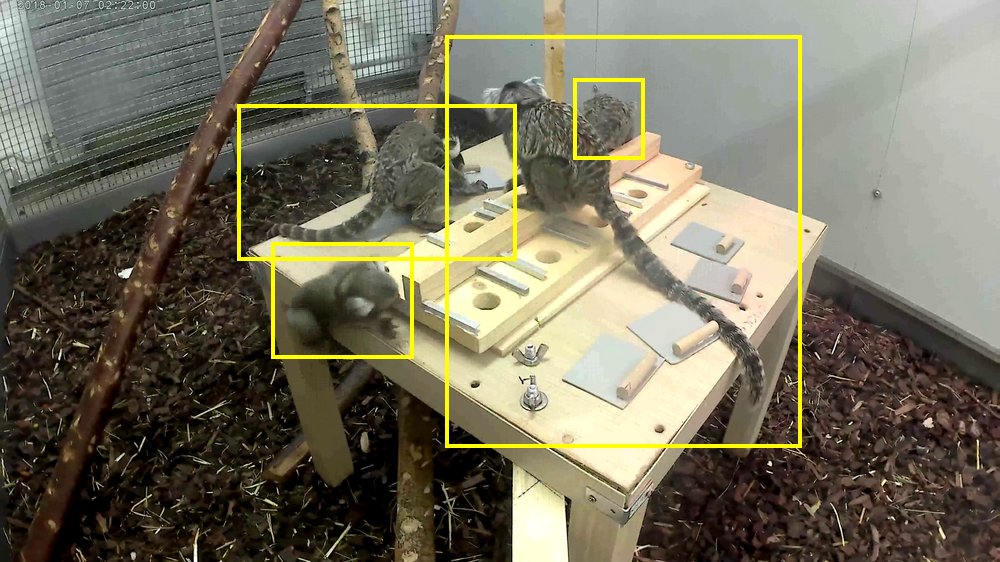
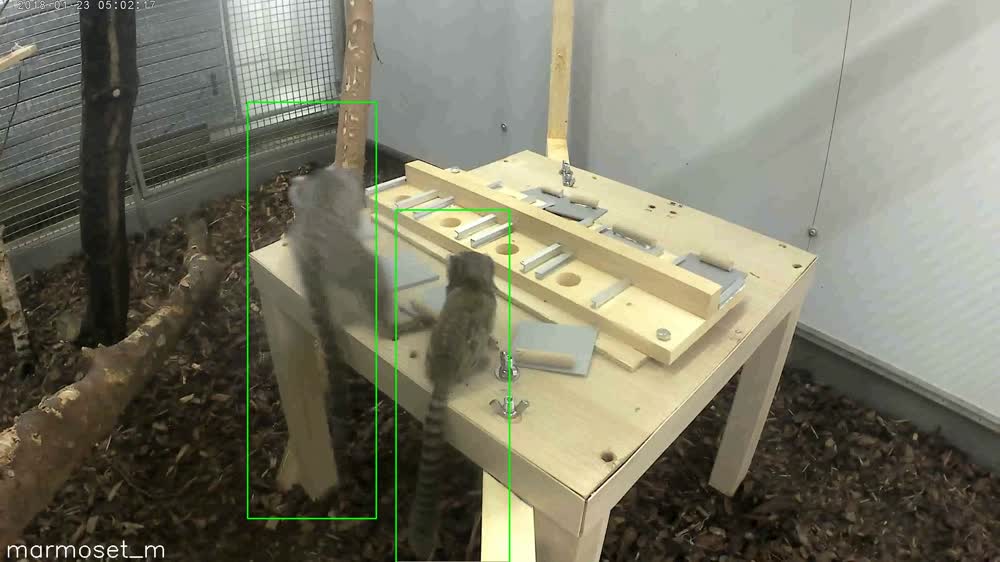
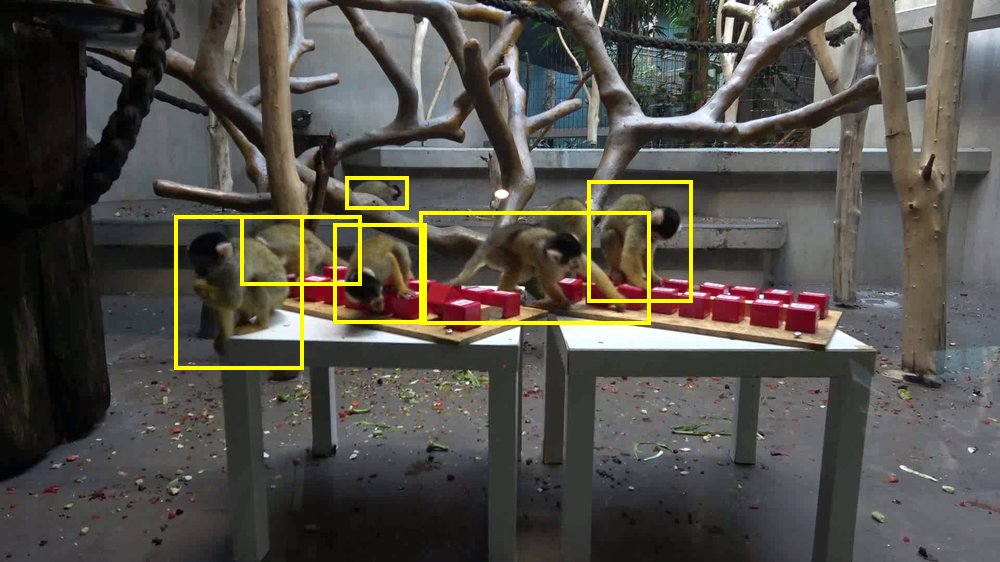
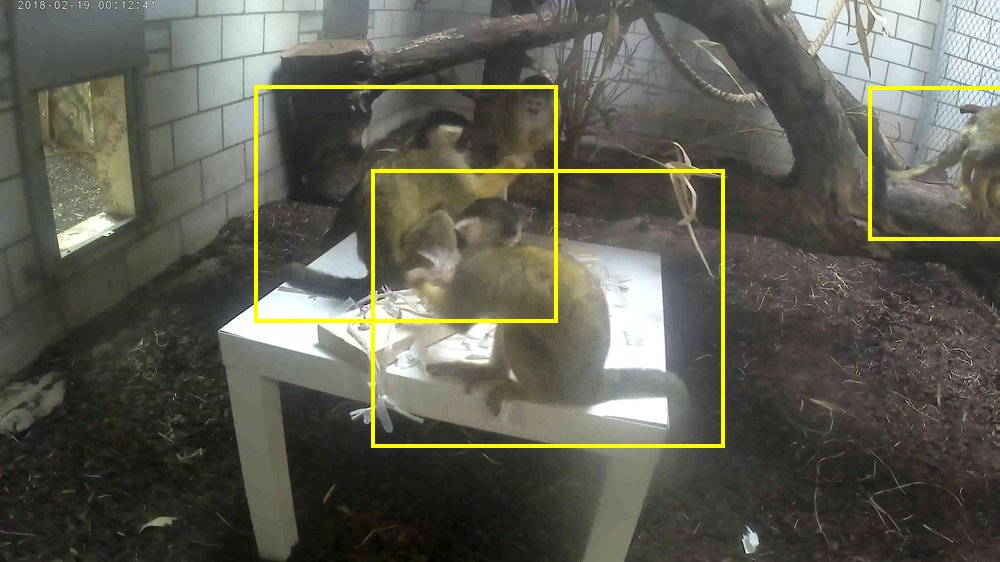
Sample frames from each of the 11 R&O research subsets and the YT-Filtered web data.
R&O — Research Data
eulemur
eulemur
eulemur
baboon_w
baboon_w
baboon_w
baboon_a
baboon_a
baboon_a
lemur
lemur
lemur
assamese
assamese
assamese
barbary_a
barbary_a
barbary_a
barbary_t
marmoset
marmoset
saimiri
saimiri
rhesus
YT-Filtered — Web Data
youtube
youtube
youtube
youtube
youtube
youtube
youtube
youtube
Data Contributors
PriVi was made possible by contributions from researchers across multiple institutions. The table below lists the contributors of each dataset subset.
Dataset
Contributors
eulemur
Elif Karakoc (DPZ-BE), Claudia Fichtel (DPZ-BE), Peter Kappeler (UGoe)
baboon_w
William J. O'Hearn (UGoe/DPZ-CE), Julia Fischer (UGoe/DPZ-CE)
baboon_a
Julia Fischer (UGoe/DPZ-CE)
lemur
Kaja Wierucka (DPZ-BE)
assamese
Sofia M. Pereira (UGoe/DPZ-SE), Julia Ostner (UGoe/DPZ-SE), Oliver Schülke (UGoe/DPZ-SE)
barbary_a
Julia Fischer (UGoe/DPZ-CE)
barbary_t
Tiffany Bosshard (DPZ-CE), Julia Fischer (UGoe/DPZ-CE)
saimiri
Sandro Sehner (DPZ-BE), Judith Burkart (UZH)
marmoset
Sandro Sehner (DPZ-BE), Judith Burkart (UZH)
rhesus
Alexander Gail (UGoe/DPZ-CN), Neda Shahidi (UGoe/DPZ-CN)
UGoe = University of Göttingen ·
DPZ-BE = DPZ, Behavioral Ecology & Sociobiology ·
DPZ-CE = DPZ, Cognitive Ethology ·
DPZ-SE = DPZ, Social Evolution in Primates ·
DPZ-CN = DPZ, Cognitive Neuroscience ·
UZH = University of Zurich ·
DPZ = German Primate Center — Leibniz Institute for Primate Research
Citation
@inproceedings{mueller2026privi,
  title   = {PriVi: Towards a General-Purpose Video Model for Primate
             Behavior in the Wild},
  author  = {Mueller, Felix B. and Meier, Jan F. and Lueddecke, Timo and Vogg, Richard and Freixanet, Roger L. and Hassler, Valentin and Bosshard, Tiffany and Karakoc, Elif and O'Hearn, William J. and Pereira, Sofia M. and Sehner, Sandro and Wierucka, Kaja and Burkart, Judith and Fichtel, Claudia and Fischer, Julia and Gail, Alexander and Hobaiter, Catherine and Ostner, Julia and Samuni, Liran and Sch{\"u}lke, Oliver and Shahidi, Neda and Wessling, Erin G. and Ecker, Alexander S.},
  booktitle = {Proceedings of the IEEE/CVF Conference on Computer Vision and Pattern Recognition (CVPR)},
  year    = {2026},
  note    = {to appear}
}